My Husband Took A Trip With Another Woman.
Advertisements

After the call, I sat in silence, overwhelmed by emotion. It was liberating and terrifying all at once. I had just taken control in a way I never had before. The fear was still there, but it was layered under something stronger — a rising sense of courage.
Part of me questioned the decision. Was I being impulsive? Was this going to spiral out of control? But the part of me that had been hurt, betrayed, and silenced for so long was finally awake. This act didn’t fix everything, but it helped me breathe again — even if only for a moment.

As I tried to sit with my thoughts, they turned darker. I kept imagining them — laughing in a café, holding hands in the sun, living in a fantasy while I was home, oblivious. Every scene felt like a dagger, each imagined detail worse than the last. I couldn’t stop the images.
The betrayal wasn’t just physical — it was emotional, psychological, and spiritual. I had given him my trust, my years, my heart. And now, all I had left were broken promises and ghostly visions of a love that was never real to him. I tried to push them out, but they haunted me still.

That night felt endless. Every tiny sound in the house became amplified, as if the walls themselves were watching me wait. I lay there with my thoughts racing, playing out every possible scenario. Would he lash out? Would he come home early? Would he even realize what I’d done right away?
The clock ticked past 3 a.m., and still, there was nothing. No calls, no texts, no sign that he knew. The silence was deafening, and it made my nerves worse. I stared at the ceiling, wide-eyed and restless, consumed by a cocktail of fear, guilt, and grim anticipation. I wasn’t sure if I was bracing for war or hoping he’d just disappear.
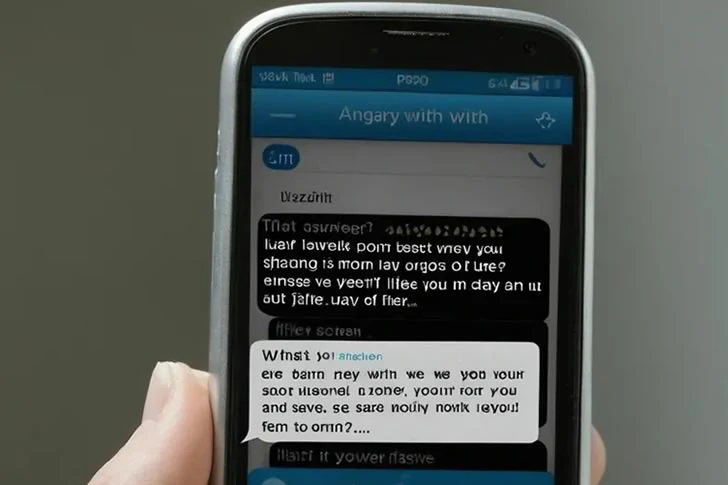
When I finally drifted into light sleep, my phone buzzed. The message was short, but the rage was loud: “What’s going on with the cards?!” He didn’t even try to hide his frustration. The tone was accusatory, confused, and panicked — everything I had hoped for when I canceled the cards.
I read the message over and over, letting the sharpness of his words sink in. He was clearly blindsided, and for once, I held the upper hand. I could picture him scrambling, his plans derailed, and it gave me a strange sense of peace. His trip may not have ended, but the illusion of control had — and that was my victory.

Instead of responding, I let the silence speak for me. I left the message unread, my phone face-down on the table, untouched. Ignoring him wasn’t easy, but it was powerful. He expected a reaction — maybe tears, maybe apologies — but he got nothing. And that nothing was everything.
Lisa called to check in, and I filled her in on the text. “He’s furious but clueless,” I said, trying to keep my voice calm. She laughed, a sound that lightened the heavy tension just a little. Together, we agreed — if he was panicking now, he clearly had something worth hiding. And we were ready to find it.

Lisa came over later that day, laptops in hand and coffee cups at the ready. We sat down at my kitchen table like amateur investigators, determined to trace his every digital move. We knew there had to be clues — nobody disappears without leaving a trace in today’s world.
“Check his likes and recent follows,” Lisa said as she scrolled through his profile. We combed through his timeline, photo tags, and even his friends’ updates. Each detail, no matter how small, added to the picture we were building. It was tedious work, but every click brought us closer to understanding the full extent of his lies.
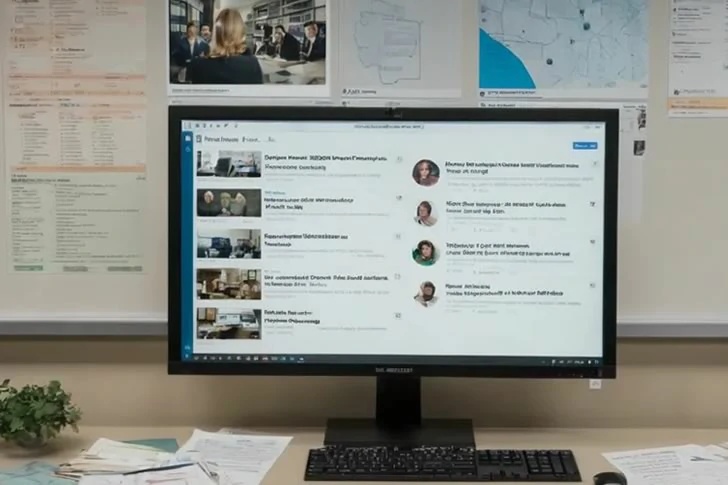
Piece by piece, a pattern began to emerge. A tagged photo here, a story highlight there — all seemingly harmless, but together they told a story. A recent check-in placed him in Miami, and a suspicious selfie with a woman we didn’t recognize made the puzzle all too real.
“There,” I said, pointing at the screen. “That’s him. That’s where he is.” The realization hit me harder than I expected. It wasn’t just a betrayal in theory anymore — it was physical, tangible. He wasn’t just cheating emotionally; he was off living a double life in full view. And now, I had proof.
The initial rage I felt had shifted into something colder, more determined. This wasn’t about getting even anymore — it was about understanding how deep the betrayal went. I needed clarity. I needed answers. And more than anything, I needed to reclaim my sense of control.
I started thinking about what I’d do next. Should I confront him directly? Call him out publicly? Or stay quiet and keep gathering evidence until he had nowhere left to run? My heart said one thing, but my mind leaned another way. The only certainty was this: I couldn’t ignore the truth anymore.

I know I can’t back down now — too much has been uncovered to pretend things can return to normal. With Lisa by my side, I begin compiling everything: the texts, the locations, the screenshots, and the names. It all goes into a neat little document, a timeline of betrayal I never asked to create. Each detail feels like a nail in the coffin of our marriage.
Lisa stays sharp and organized, helping me break the emotional weight into manageable steps. “We need to stay ahead,” she reminds me, as we plan out the confrontation. This is no longer just about emotions; it’s strategy now. Every step feels heavier than the last, but the need for closure drives me forward. I’m not just confronting a husband — I’m confronting a lie I lived in for years.

Days go by with no word from him, and the silence begins to press against my sanity. I check my phone obsessively, even when I know there’s no new message. The lack of communication is louder than a shouting match. It’s calculated, it’s intentional, and it hurts more than any words ever could.
I try to occupy myself with chores, errands, anything — but nothing quiets the storm in my head. Is he running? Is he hiding? Or is he simply indifferent? The endless guessing is torture. Every unanswered message chips away at the last bit of trust I tried to hold onto. His silence isn’t peace — it’s another form of cruelty.

Out of growing desperation, I reach out to his colleagues. I pretend to be the concerned wife, voice trembling just enough to sound genuine. “Hey, I haven’t heard from him in days. Has he been around?” I ask, praying they don’t catch on to my real intentions. Most offer polite but vague replies, unsure of what’s going on themselves.
Then, one colleague casually mentions he took an unexpected leave — no details, no context. It strikes me like lightning. Why didn’t he tell me? Why didn’t he even lie about it? That offhanded comment feels more suspicious than a blatant lie. Something is off, and now I’m more certain than ever that he’s hiding something deeper.

The people I talk to drop hints, but none offer anything solid. One person mentions seeing him at a coffee shop far from his usual route. Another says he’s been spotted at late-night meetings in unfamiliar places. These pieces sound more like rumors than facts, but together, they whisper of a life I never knew he was living.
I record every detail, hoping that the right pattern will emerge from the mess. Still, every answer seems to raise two more questions. His trail is faint, like a ghost moving through fog. The closer I think I’m getting, the more the truth seems to slip through my fingers. I’m chasing shadows.
The stress begins to wear me down. I question if all this effort is even worth it. Every new clue leads nowhere, every suspicion remains unconfirmed. I’ve poured days into this search, yet all I have is more uncertainty. It’s as if he planned this disappearance perfectly, leaving only enough behind to taunt me.
Lisa tries to keep me grounded. “We’ll get to the bottom of this,” she says with quiet certainty. But even her confidence isn’t enough to drown out the creeping doubt. What if this whole effort is futile? What if he’s already moved on — not just physically, but emotionally? That thought threatens to unravel me more than anything else.

Just as I’m about to call him and demand answers, the unexpected sound of the doorbell jolts me from my thoughts. It’s a mundane noise, yet in this moment, it feels ominous. When I open the door, a deliveryman stands there holding a package addressed to my husband. My stomach twists as I accept it — what could possibly be inside?
I bring the package into the house, hands trembling with a mix of suspicion and adrenaline. It’s a simple brown box, unassuming and silent, but something about it feels significant. I stare at it for a moment before setting it on the table. This might be the key I’ve been waiting for — a crack in the wall of secrets he’s built. My curiosity takes over, stronger than my hesitation.
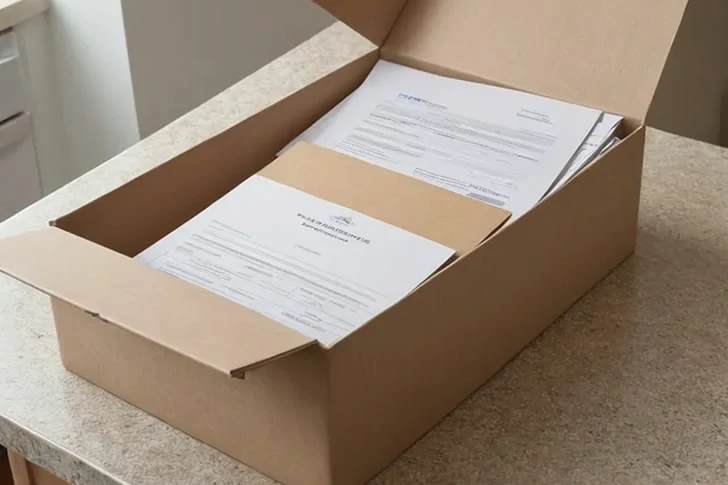
I don’t wait long before opening it. The tape peels off easily, but each tug feels loaded with tension. Inside is a neat stack of documents — professional, clean, and formal. They’re bound together with precision, giving the impression of something serious. As I flip through the first few pages, a wave of confusion and intrigue washes over me.
These aren’t random papers — they’re organized and official-looking. My fingers trace the legal letterhead, and I realize they detail something major. The language is dense, full of financial and legal terminology, but I understand enough to know this isn’t just junk mail. Whatever this is, it’s not meant to be hidden away in a plain package. It was meant to be quiet — and now it’s in my hands.

As I read further, it becomes clear: this is documentation for a hidden real estate investment. The amount of money involved is substantial, and the signatures confirm his involvement. He bought a property, negotiated terms, and signed legal agreements — all without telling me a single word. The weight of the betrayal grows heavier with every page I turn.
Why would he keep something this big from me? We share everything — or so I thought. This isn’t just a case of financial secrecy. It’s deliberate deception. It’s the kind of planning that requires time, effort, and intent. As I sit there surrounded by the evidence of his secret, my frustration evolves into unrelenting determination. I need to know just how far this double life goes.

What hits me hardest is the location. I recognize the address immediately — it’s eerily close to where he said his “business trip” was taking place. The coincidence is too perfect to ignore. I grab my phone and check the itinerary he once casually mentioned. It aligns almost exactly. Suddenly, the puzzle begins solving itself in front of me.
This real estate isn’t just an investment — it’s part of his secret escape. A private haven. Possibly even a shared space with someone else. The realization is like a punch to the gut. Every lie he told starts to unravel in the shadow of this one address. It’s no longer a question of if he betrayed me — now, it’s about how deep the betrayal runs.

The more I uncover, the more questions arise. Now, there’s talk of a hidden property — something he never once mentioned in all our years together. The very thought of him secretly investing in real estate without so much as a word to me stirs something deeper than anger. It’s betrayal laced with financial deceit, and I can’t ignore it.
My mind spins with questions: How long has this been going on? Is this where he’s been hiding his second life? Each theory is more distressing than the last. But no matter how painful the answers might be, I know I can’t stop now. The only way out of this mess is to walk straight through it, armed with facts and clarity.

Determined to get to the bottom of it, I decide to visit the property myself. Lisa is all in, her loyalty as firm as ever. We huddle over her kitchen table with maps, laptop screens glowing, documents scattered like war plans. This isn’t just a trip; it’s a mission to uncover the truth, whatever it may cost emotionally.
Lisa looks up, meeting my eyes. “We’re really doing this?” she asks. I nod, my voice steady. “Absolutely.” We pack everything we might need — cameras, notes, copies of records. There’s a strange weight to the preparation, like gearing up for battle. And in many ways, that’s exactly what it feels like.

We hit the road with heavy hearts but determined minds. The car ride is long and tense, filled with quiet moments and thoughts neither of us voice aloud. The closer we get, the thicker the tension grows. This trip feels more symbolic than literal — a journey into the heart of a broken marriage.
“Do you think we’ll find proof?” Lisa finally breaks the silence. I grip the wheel a little tighter. “I hope we do,” I reply, though I’m not sure if hope is the right word anymore. What we find could shatter the last remnants of denial I’ve held onto. Still, we keep going. Because turning back isn’t an option.

Arriving at the property is surreal. It’s far bigger and more developed than I had imagined. The house stands tall, clean, and well-maintained — nothing like a secret hideout. It’s clear this isn’t just an abandoned shell. Someone’s been here regularly, and they’ve taken care of the place.
We step out of the car, silence stretching between us. The surrounding land is quiet, almost unnervingly so. “It’s eerily peaceful,” Lisa says, her voice low. I nod, scanning the grounds for any sign of him — or her. Each step forward feels like stepping deeper into a truth I’m not ready for, but have no choice but to face.

Just as we begin to explore, an elderly man walks up from the nearby property. He eyes us with polite suspicion and asks, “You two looking to buy?” His casual tone masks a deeper curiosity. We weren’t expecting to be noticed, let alone questioned.
Lisa responds quickly, flashing a polite smile. “Just checking the place out,” she replies. Her calm composure keeps us grounded. I stay quiet, hoping he might offer some insight — or at least confirm that we’re in the right place. His presence might be the key to finally connecting the dots.

Then he drops a bombshell: my husband has been coming here almost every weekend. “Always with some woman,” the neighbor says, as if it’s the most ordinary thing. His words knock the air out of me, even though I was expecting something like this. Hearing it aloud makes it feel undeniably real.
Lisa asks for more details, keeping the conversation flowing while I try to steady my emotions. The neighbor continues, casually describing their visits like he’s talking about familiar faces at the grocery store. And just like that, everything I feared is confirmed — this wasn’t just a fling. It was a parallel life, lived out in plain sight.

Still posing as potential buyers, Lisa and I press the neighbor for more details. She casually asks, “Does he ever mention what he’s doing here?” The man tilts his head, thinking. “Not really. Keeps to himself, always on the phone or shuffling papers,” he replies. That one comment opens up a whole new line of suspicion in my mind.
I can’t shake the image of my husband holed up in this house, juggling phone calls and documents like he’s running a second life. What kind of business would require such secrecy? It clearly isn’t innocent. We thank the neighbor politely, but inside, my stomach twists. Every new detail adds weight to the reality I’m piecing together — the man I married has carefully built a world I was never meant to see.

The neighbor’s continued stories only deepen my sense of betrayal. Each tale, each memory he shares, reveals a version of my husband that I never knew. “He’s private, but seems like a good man,” the neighbor says, still unaware of the storm brewing inside me. But I know better now — that “privacy” was a cover for deception.
Lisa keeps him talking while I absorb every word like a blow to the chest. I think back on our shared life, now shadowed by all these hidden moments he spent here. How many weekends did he fake a conference or claim a late meeting, only to escape to this place? My rage no longer boils over — it simmers, controlled, fueling my new mission for truth and accountability.
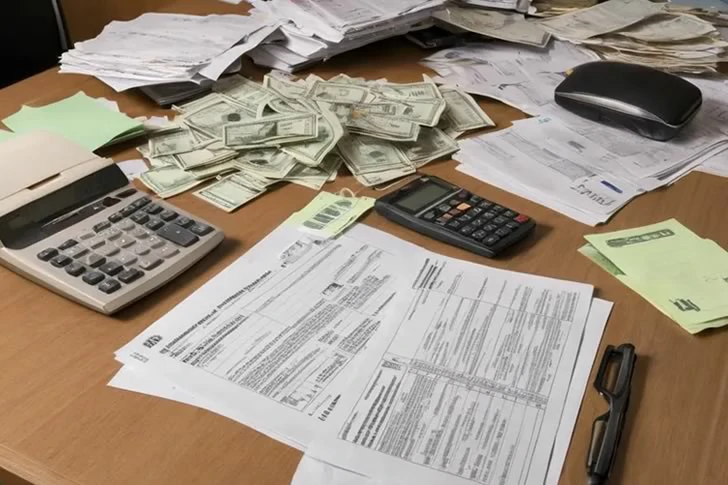
Inside the house, our quiet search reveals more than we expected. Lisa opens a drawer and pulls out a thick envelope. “You need to see this,” she says, handing it to me. Inside are bills, receipts, and handwritten notes — all pointing toward financial activity that raises red flags. This isn’t just property upkeep; these are large transactions, unexplained and suspicious.
My pulse quickens as I flip through them. Some of the records hint at renovations, others at wire transfers to unfamiliar accounts. There’s no way this is just a side investment. It feels like something darker — hidden assets, off-the-books deals. Lisa meets my gaze, and we both know: this isn’t just betrayal. This is a hidden world we’ve only begun to uncover.

Shaken, we quietly leave the house, moving quickly but carefully to avoid drawing attention. “We need to get out of here before someone sees us,” Lisa whispers, scanning the area. I nod, still trying to process everything we’ve found. The weight of what we now know presses down like a physical force.
Once we’re in the car and on the road, the shock begins to fade, replaced by a clear sense of direction. “We need to follow the money,” Lisa says, her voice calm but intense. She’s right. This isn’t just about catching him in a lie — it’s about understanding the full scope of what he’s been hiding. Our next move has to be precise. This time, we’ll go deeper.

Once we return home, Lisa and I waste no time. We clear off the dining table and begin laying out everything — photos, receipts, timelines, email printouts. The table becomes a battlefield of truth, each piece of evidence a weapon in our fight. “We need airtight proof,” Lisa says, her voice calm but steely. I nod, fully aware that now we’re not just reacting — we’re strategizing.
With a shared sense of purpose, we begin planning every next move. Our list grows with tasks: track his financial flows, log his communications, contact potential witnesses. The adrenaline of purpose keeps us sharp, focused. We are no longer in the shadows — we are stepping into the light with one goal: bring everything into the open. No more guessing. No more fear.

Taking a deep breath, I pick up the phone and dial his employer. I keep my tone measured, sounding more concerned than accusatory. “I’m not trying to stir trouble, but I think you should know there may be financial misconduct on his part,” I say. The person on the other end is stunned but listens carefully. “Thank you for this,” they say. “We’ll investigate immediately.”
As I hang up, my heart races, but there’s a strange sense of empowerment. I know this will rattle him. If he thought he could play both sides — personal and professional — without consequences, he’s about to learn otherwise. It feels like a turning point. Involving his job is serious, but so is betrayal on this scale. He chose this path. Now, I’m choosing mine.
Just days later, I receive a follow-up email confirming that an internal investigation is underway. “We’ve taken your report seriously and have opened a formal review,” it reads. I imagine the tension in his workplace now, the pressure tightening around him. The calm exterior he wears is likely cracking with every question raised and every file reviewed.
I picture him scrambling, trying to erase digital footprints, reframe stories, or shift blame — but it’s too late. The truth is surfacing faster than he can cover it. It’s grim satisfaction, yes, but it also feels justified. He built this lie. Now, he’s watching it collapse from every side — professionally, financially, and personally. And I’m no longer just a victim; I’m part of the reckoning.

Lisa and I dive deeper into our investigation. We sit shoulder to shoulder, examining every document we’ve collected — bank statements, contracts, credit card activity. Lisa points to a suspicious transaction. “Another untraceable transfer,” she notes. We highlight, mark, file. The kitchen becomes our command center, cluttered but purposeful. Every evening, we gather more dots — and connect them.
We work like detectives, cross-checking names, property IDs, and email aliases. My hands tremble at times, but my mind stays sharp. Each new link adds clarity to the picture. There are no accidents in these numbers — only intent. And we’re mapping it, piece by damning piece. No emotion clouds our focus now. This is about facts, and we’re documenting every one of them.
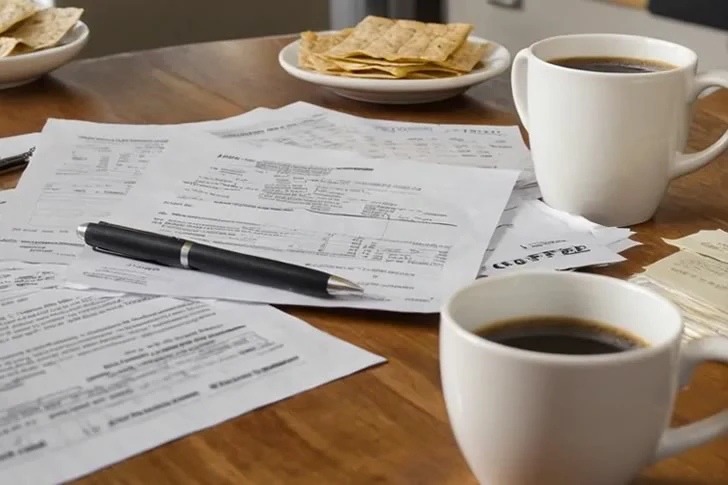
With each new file uncovered, the full scope of his betrayal becomes undeniable. Lisa holds up a document. “This ties him to yet another undisclosed investment,” she says. The numbers are staggering. He’s been laundering money, hiding assets, and possibly using shell accounts. The man I thought I knew has layers of secrets — and they’re all rotten at the core.
My stomach turns as I realize how long this must have been going on. Our vacations, our home renovations — were they funded by stolen money? Was I living in a house built on lies? I feel grief, anger, and resolve crashing together. But more than anything, I feel the urgent need for truth. This isn’t just about justice anymore. It’s about reclaiming my life.

Fear used to paralyze me. Now, it drives me forward. The more we uncover, the more determined I become. Lisa keeps our momentum steady. “You’ve come this far. You can’t stop now,” she reminds me as we sift through a new pile of bank reports. Her confidence feeds mine, and even in exhaustion, we press on. There’s too much at stake.
I begin to picture the moment I confront him — every lie laid bare, every secret revealed. That image keeps me awake, keeps me digging. Lisa and I now operate on instinct and grit, fueled by the need to end this charade. Every piece of evidence is a step closer to the truth — and we won’t stop until we reach it.
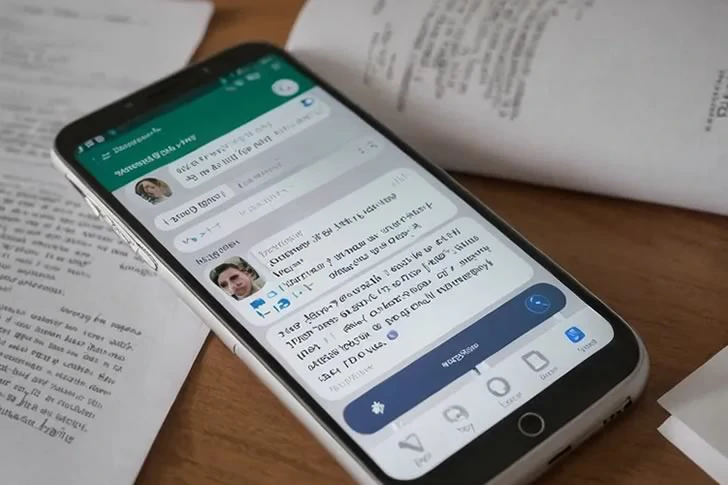
The messages begin arriving from unknown numbers—short, chilling phrases like “Drop it, or else” or “You don’t know who you’re messing with.” Every ping from my phone feels like a jolt to the spine. I show the texts to Lisa, and her reaction is a mix of anger and fierce resolve. “We can’t let them scare us,” she says, and I know she’s right. Fear is exactly what they want, and we refuse to give it to them.
Still, the fear is real. I start double-checking locks, watching over my shoulder, even researching ways to trace anonymous texts. The idea of going to the police crosses my mind more than once, though I hesitate without solid proof. These threats confirm one thing—we’re getting dangerously close to something they desperately want to keep hidden. That knowledge, while frightening, sharpens our determination. We won’t back down. We’ll push forward, smarter and stronger.

Despite the clear danger, I dig in even harder. “We have to be extra careful,” I tell Lisa as we organize the evidence on the table once more. There’s no room for mistakes now. She agrees with a determined nod, her eyes scanning the documents like a detective piecing together a crime. Each paper, each photo, each account adds clarity to the tangled mess we’ve uncovered.
The threats don’t deter us—they confirm we’re making progress. Every attempt to silence us only fuels our momentum. We build a timeline, cross-reference financial records, and connect names to addresses. We’re crafting a story too detailed to dismiss. The deeper we go, the more obvious it becomes: this is no misunderstanding or isolated betrayal. This is a calculated web of deception, and we’re about to tear it apart.
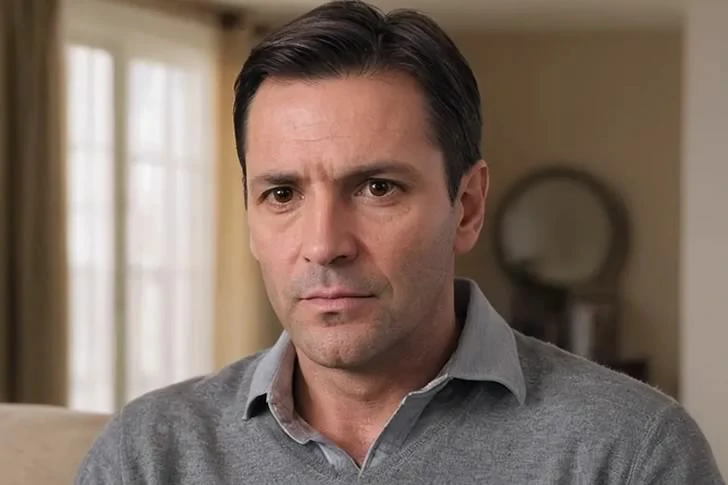
My husband’s once-calm demeanor has unraveled completely. His texts swing between emotional outbursts and desperate apologies. One minute he’s begging for forgiveness, the next he’s shouting through written words. “You’re ruining everything!” he writes, followed quickly by, “Please, let’s just talk.” The man who used to control every situation now flounders in panic. His emotional instability is becoming more evident by the day.
Watching him unravel from a distance is surreal. For years he played the part of the composed, collected husband. Now, each erratic message shows how much control he’s truly lost. The lies are caving in on him, and he’s grasping at straws to keep the facade intact. But it’s too late. My sympathy has faded, replaced by focus. His unraveling isn’t just proof of guilt—it’s the final confirmation we needed.

Out of the blue, his mistress contacts me. The message is polite, even apologetic: “Let’s talk. I can explain everything.” My first instinct is rage—how dare she think I’d want to hear her side? But after the initial shock, curiosity kicks in. I read her words carefully, searching for cracks in her story and signs of how much she really knew.
Her perspective casts him in an even darker light—manipulative, deceitful, secretive. Still, I can’t tell if she’s being honest or just trying to save herself. Lisa reads over my shoulder, frowning as she absorbs the details. We exchange a glance that says everything—we don’t trust her. But we’ll take every scrap of information we can get. If she wants to talk, we’ll let her. Just not on her terms.

Her message could have thrown me off. Instead, it sharpens my focus. I share the texts with Lisa, who nods solemnly as she reads. “We’re getting close,” I whisper, and she doesn’t disagree. There’s no going back now. We’ve come too far, seen too much. Every lie exposed fuels a deeper fire inside me. I won’t rest until the truth is fully out.
We reaffirm our commitment to each other and the mission. They tried to confuse me, shake me, distract me—but all they’ve done is reveal how desperate they are. The more they flail, the more it confirms we’re winning. This isn’t just about justice anymore. It’s about reclaiming everything he tried to steal from me—trust, clarity, and control. We won’t stop. Not until the whole truth is laid bare.

Lisa suggests the next logical step: legal help. “You need protection,” she says, and I know she’s right. We make an appointment with a highly recommended attorney. The office feels intimidating at first—rows of leather-bound books, walls covered in certifications—but once we sit down, a sense of seriousness settles over us. The time for emotion has passed. Now, it’s about strategy.
We present what we know, laying out the documents, messages, and patterns. The lawyer listens intently, occasionally jotting down notes. “You’ve done your homework,” he finally says. “Now let’s make sure it counts.” His professionalism gives us confidence. With Lisa by my side, I feel stronger. Whatever legal storm lies ahead, we’ll be prepared. It’s time to protect myself—legally, financially, and emotionally.

The lawyer is blunt but clear: secure all marital assets and prepare to file for divorce. “You need to protect yourself,” he says, his tone firm but not unkind. The word ‘divorce’ hangs in the air—heavy, inevitable. We dive into the legal details—who owns what, what can be claimed, what can be contested. It’s sobering, but necessary.
I take notes furiously, each point driving home how serious things have become. “Gather all remaining evidence,” the lawyer stresses. “Everything will matter.” As we leave his office, the emotional weight bears down, but I also feel more empowered. I have a plan now. Not just to expose the lies, but to ensure I emerge from this whole. This is more than a confrontation—it’s an escape.
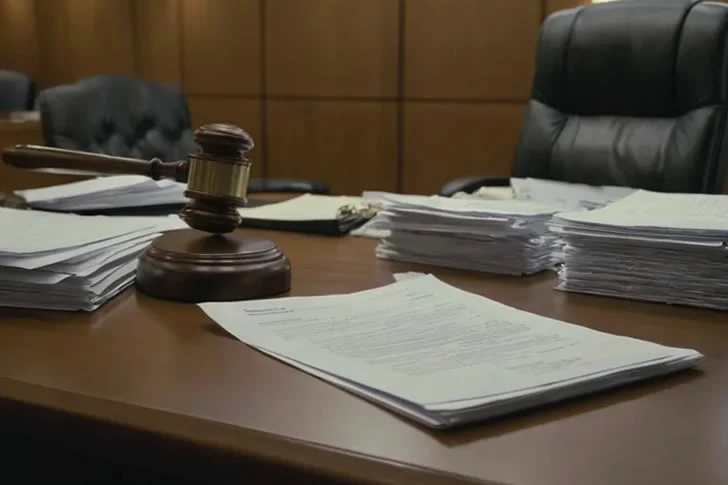
The legal process officially begins, and with it comes a heavy blend of emotions—relief, fear, and an underlying sadness I didn’t expect. Filing the divorce papers feels like crossing a point of no return, one that confirms the end of a life I thought I knew. Lisa stands beside me as I hand over the documents, her quiet presence grounding me. “This is the right move,” she assures, and deep down, I know she’s right. There’s no turning back now.
Court dates are set, and paperwork multiplies. Every form I sign makes it feel more real, more permanent. The lawyer walks us through the procedures step by step, his calm demeanor a stark contrast to the emotional turbulence swirling in my chest. I try to stay focused, but each document reminds me of what’s been lost. Still, the path ahead—though exhausting—is clear. Every motion filed is a brick in the foundation of a new beginning.
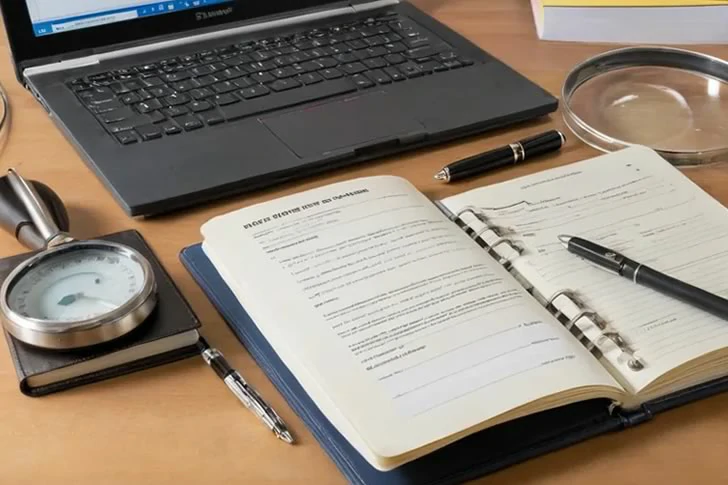
I begin assembling the full account of everything he’s done—every shady transaction, every lie, every betrayal—organized meticulously for court. The process is emotionally taxing, but also empowering. This is my story to tell now, and I intend to tell it in full. Lisa is by my side, helping me structure everything into a coherent, undeniable narrative. Her focus is unwavering. “We need to be precise,” she says, and I follow her lead.
Each written sentence chips away at the false image he crafted for so long. I include screenshots of texts, photocopies of financial records, and summaries of his secretive activities. This isn’t just about proving guilt—it’s about reclaiming truth. What once felt like a tangle of chaos now reveals a pattern of intentional deceit. And as I look over the compiled document, I feel a shift. This is no longer about vengeance. It’s about closure and justice.
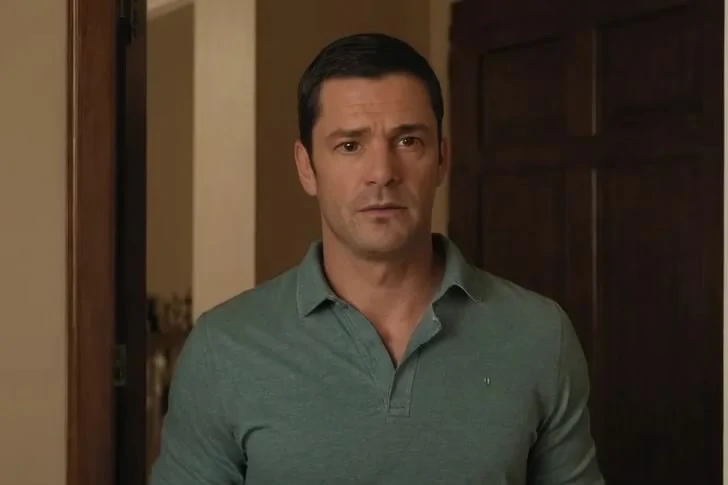
Out of nowhere, he appears on my doorstep—disheveled, eyes hollow, voice trembling. “We need to talk,” he says, as if an apology can erase everything he’s done. There’s desperation in his face, the kind that only comes from watching control slip away. For a split second, a rush of old memories threatens my clarity—birthdays, vacations, laughter. But then I remember the lies, the mistress, the threats.
I steady my voice. “There’s nothing to discuss.” His eyes plead, searching mine for forgiveness, for softness—but I offer none. That door is closed. This isn’t about anger anymore; it’s about dignity. His presence here is too little, too late. As he turns away, defeated, I feel no regret. This moment, painful as it is, confirms that I made the right choice. I’m not looking back. I’m moving forward—with the truth on my side.

He stands before me, voice trembling as he utters the words, “I’m sorry for everything.” But those words feel empty now, stripped of any real weight after all he’s done. Apologies can’t erase the betrayal, the lies, or the damage left in their wake. I meet his gaze without flinching and reply, “It’s too late for that.” My voice is steady, and I mean every word. The past is etched too deeply into my memory to be undone with a single apology.
He tries again, rambling about misunderstandings and intentions, but I’ve heard enough. I raise my hand and stop him midsentence. Lisa stands quietly beside me, the silent embodiment of the journey we’ve shared. Her presence reminds me of our purpose—to expose the truth and reclaim control. I turn to her and say simply, “We need to go.” With that, I walk away, the conversation finished. His words may have sought redemption, but my resolve is firm. I’m not looking back.

Now that the legal wheels are turning, I turn my attention back to the details that still don’t add up. Lisa and I huddle over our documents, scanning spreadsheets and transaction logs for anything we may have missed. “There’s still something missing,” I mutter, frustrated by the nagging sense that we’re overlooking a key detail. The answer feels close—just beyond our fingertips. We go through emails, receipts, and messages again, determined to close every gap in our understanding.
Lisa remains sharp, catching small inconsistencies and flagging them for deeper review. “We’re close,” she assures me, and her confidence gives me strength. We draw timelines, connect people to accounts, and compare patterns that seemed irrelevant before. Piece by piece, the puzzle begins to form a clearer picture. It’s tedious work, but with every passing hour, the missing piece seems nearer. We’re not just hoping to find the truth anymore—we’re on the brink of uncovering it.

As we dive deeper into our search, we begin to see clear signs of my husband’s panic. He attempts to drain our joint bank account, but finds it frozen—thanks to the lawyer’s foresight. Financial alerts start rolling in, each one a frantic move to salvage his position. “He’s panicking,” Lisa says, eyes glued to the updates on her laptop. It’s all unraveling for him now, and there’s no way for him to hide it anymore.
The sense of control he once had is slipping fast. His decisions become more irrational—erratic transfers, multiple failed login attempts, and desperate attempts to move money through obscure methods. “He’s losing control,” I say, the tension coiling in my chest. But instead of fear, I feel a sense of progress. Every failed attempt to manipulate the system is a small victory for us. We remain vigilant, watching and waiting. His unraveling only brings us closer to the truth.

His inability to access our assets begins to crack the façade he worked so hard to maintain. His texts become erratic—some filled with rage, others with begging and confusion. He jumps from threats to pleas within minutes. “What’s next?” I ask Lisa, who remains calm and analytical. “He’s cornered,” she responds, scanning each message. We know what a cornered man is capable of, and we brace for what could come.
Then he shows up again—disheveled, shouting, demanding answers he no longer deserves. “Why are you doing this to me?” he cries, as if I’m the villain in this story. I stay quiet, unshaken by his unraveling state. He paces, throws accusations, but I see him for who he truly is now—desperate, unstable, exposed. His loss of control is a stark contrast to the calm clarity I’ve gained. Every reckless act only confirms that I must finish what I started.
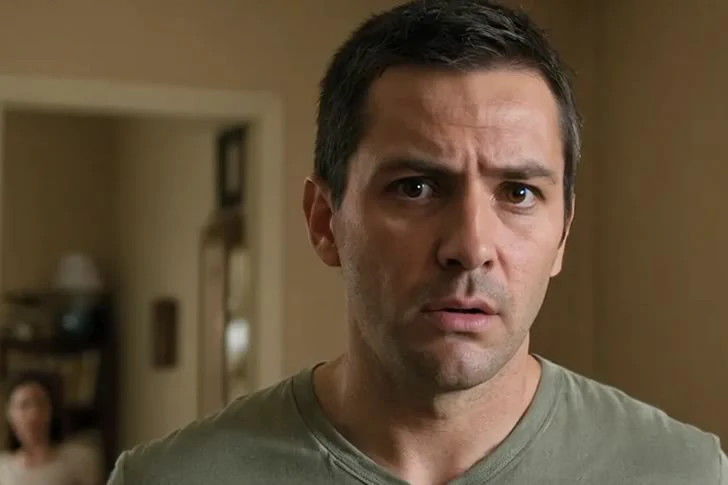
He appears at my door without warning, rage and desperation mingling in his wild eyes. “Why are you doing this?” he yells, his voice cracking under the pressure. His presence is suffocating, his energy volatile. I say nothing, arms folded tightly across my chest, unwilling to give him the reaction he’s clearly fishing for. His accusations fly like darts, aimed to provoke and confuse, but I remain silent. He can scream, plead, or threaten—it won’t change the facts or derail my focus.
He paces the room like a caged animal, frustration mounting with every unanswered question. “You can’t ignore me forever!” he roars, slamming his palm against the wall. His anger simmers just beneath the surface, barely held back. Despite the fear knotting in my stomach, I don’t flinch. My silence is intentional, a wall he cannot climb. It’s not about winning this moment—it’s about refusing to feed his chaos. As the minutes drag on, my refusal to engage speaks louder than words ever could.

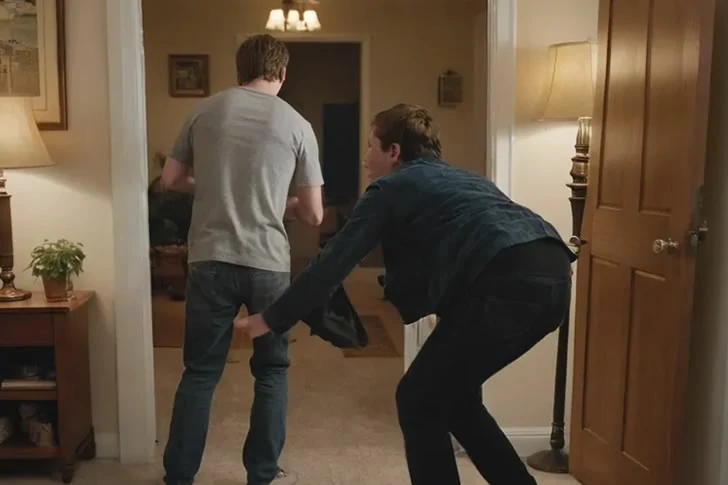
Just beyond the doorway, Lisa remains hidden, crouched low with her eyes locked on the front room. Her hand rests on the phone, ready to call for help at the first sign of danger. Every raised voice, every sudden movement makes her heart pound harder, but she remains still, listening intently. “Stay calm,” she whispers to herself, breathing slowly to steady her nerves. She knows that if anything escalates, she has to act fast. Her silent watch is my safety net, unseen but essential.
Though she can’t see my face, Lisa knows exactly what I’m going through. She’s poised to intervene, her loyalty unwavering in this moment of crisis. The seconds crawl by, heavy with tension. Each shout from him triggers a fresh spike of anxiety, but she doesn’t falter. Her job isn’t just to protect—it’s to witness and support without adding fuel to the fire. In that room, Lisa becomes my invisible strength, the one person I know will not let this spiral out of control.

His voice grows louder, more chaotic, as he attempts to tear down the wall of my silence. Every insult, every accusation, is like a hammer against my resolve, but I don’t give him what he wants. My fists clench at my sides, my breath shallow, but my voice remains locked behind clenched teeth. I feel like I’m at the very brink—my mind begging to fight back, to unleash the fury he’s earned. But I don’t. I hold the line, refusing to let him shake me.
His eyes scan mine, desperate for a flicker of emotion—anything he can use. But I give him nothing. My silence becomes my greatest weapon, denying him the chaos he craves. I think to myself, “You’re not worth the pain,” even as adrenaline surges through me. The urge to break is strong, but my will is stronger. By not engaging, I’ve taken control of the moment. It’s a small, personal victory—proof that I can face his storm and remain unbroken.
After the confrontation, I stand in the silence he left behind, the echoes of his shouting still ringing in my ears. My hands tremble slightly, but my heart is steadier than ever. I whisper a quiet vow to myself: I won’t stop until the truth is fully exposed. No matter how desperate or explosive he becomes, he won’t shake me off this path. “Is that all you’ve got?” I wonder, shaking my head. Every tantrum he throws only tightens my grip on justice.
Though emotionally drained, I feel an iron core strengthening inside me. I see him for who he truly is—frightened, cornered, and unraveling. I know now that I’m close to unraveling the final thread of his deception. When he slams the door on his way out, it’s not just the end of an argument—it’s a symbol of how little power he has left. I take a deep breath, straighten my posture, and prepare for whatever comes next. I’m not done—far from it.

A breakthrough comes when Lisa uncovers the mistress’s social media accounts. She works like a seasoned investigator, her fingers tapping rapidly across the keyboard. “Got it!” she exclaims, eyes wide with satisfaction. We rush to her side, peering at the screen as images and status updates flood the page. Each post offers more than just idle gossip—it’s a digital breadcrumb trail leading directly to the truth we’ve been seeking. Lisa’s discovery feels like someone finally turned the lights on in a dark room.
As we scroll through photos, tagged locations, and mutual interactions, the puzzle begins to take shape. Every post sheds light on the secret life they thought was hidden. Her online presence, so casually curated, turns into a vault of incriminating evidence. The thrill of discovery pulses through us, re-energizing our investigation. “We’re on to something,” I say, barely able to contain the excitement rising in my chest. For the first time in weeks, we feel a surge of hope.

We dive deeper into her digital life, where careless posts and public tags betray more than she ever intended. Vacation selfies, dinner photos, and check-ins become part of a damning tapestry. “Look at this,” Lisa says, pointing at a picture of them together, timestamped and geo-tagged. We cross-reference it with our timeline, confirming their whereabouts with startling clarity. Their attempts to cover their tracks were sloppy, driven by arrogance or perhaps sheer carelessness.
Every image and caption pulls back the curtain further, exposing a relationship that had flourished in secret for far too long. “They were at that hotel last weekend,” I whisper, the pieces locking into place like a solved riddle. Their smiling faces mock us from the screen, unaware that their own digital trail is now their undoing. With each detail uncovered, our case grows stronger. The digital footprints they left behind, once innocent memories, now serve as key evidence.
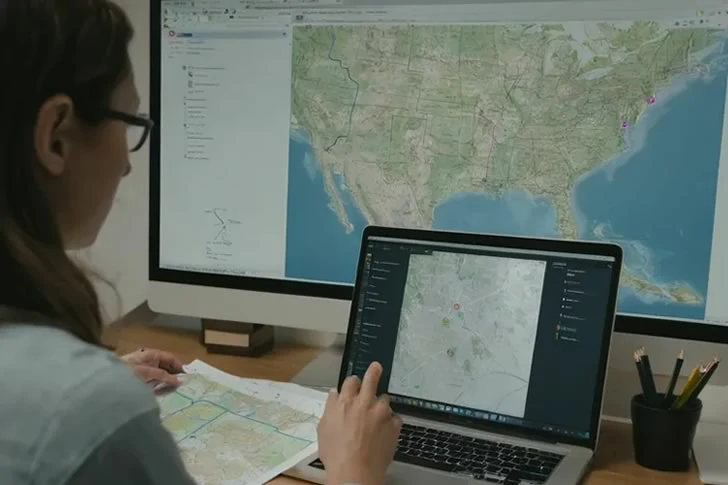
With the evidence piling up, we follow the clues like detectives on the verge of cracking a major case. Every new piece of information aligns with the last—locations, dates, and messages converging on one destination. “They’re at that resort,” Lisa says confidently, zooming in on a recent tagged check-in. The thrill of nearing the end is electrifying. We know we’re close. Every turn they thought was clever has been mapped out, their hideaway now within our grasp.
We plan carefully, every step calculated to maintain control. “We’re ready,” I say, feeling the full weight of the moment. The hours of research, emotional pain, and persistent doubt have all led to this confrontation. We prepare for every possibility, checking our facts, gathering our strength. This isn’t just about catching them—it’s about reclaiming power and standing in our truth. The time for hiding is over. The truth has a face now, and we’re going to meet it.
We craft a message designed to bait them into a meeting. It’s polite, vague, and seemingly harmless. “Meet us at the café,” I type, each word deliberately chosen to lower their guard. Lisa reads it over my shoulder, nodding in approval. Once it’s sent, the plan goes into full motion. Every contingency has been accounted for, every move rehearsed. It’s a trap disguised as a conversation, and they won’t see it coming until it’s too late.
We arrive at the café early, taking seats where we can observe without being obvious. Lisa’s gaze sweeps the room, assessing exits and vantage points. “Stick to the script,” she whispers, her tone calm but focused. Our nerves are taut, but our expressions stay composed. Every heartbeat feels amplified, every second closer to confrontation. We’ve prepared for this moment, and now it’s unfolding exactly as intended. What comes next could change everything—but we’re ready.
We come prepared with hidden cameras, small but powerful, tucked discreetly into bags and clothing. Every second is recorded—words, gestures, and the subtle body language that betrays their intentions. As they walk in, their confidence is almost laughable. They sit across from us with no clue that every word will soon be played back in another room, another setting, as evidence. Lisa leans close and murmurs, “Act natural,” reminding me to stay in character, to not give the trap away too soon.
The conversation starts light, but cracks appear quickly. The mistress shares more than she should, her tone careless. He tries to maintain composure, but the lies begin to trip over each other. They assume we’re still in the dark, that we’ve come to make peace. But we sit still, listening, gathering. Their confessions and denials weave together into a tapestry of betrayal, all caught on tape. The emotional toll is heavy, but the clarity it brings is even stronger.
Back home, we watch the footage again, this time not as participants but as witnesses to the truth. The recordings are crystal clear, the audio unmistakable. “This will hold up in court,” Lisa says firmly, eyes never leaving the screen. Every detail—every whisper of deceit, every timeline contradiction—has been documented. The weight of what we have is immense. For the first time, we’re not chasing shadows. The proof is in our hands, undeniable and thorough.
The files are organized, backed up in multiple locations, each one catalogued for court presentation. As we review the contents, the shock of betrayal fades, replaced by a steady resolve. This is no longer just a personal mission—it’s a legal reckoning. Their actions, once hidden behind charm and secrecy, now face exposure. We pack everything up, both emotionally and physically prepared for the next stage. The end is finally in sight, and we know exactly how to finish this.
The day we present our case, the atmosphere shifts. In a room filled with quiet tension, we unveil the evidence piece by piece. First the photos, then the videos, each one met with stunned silence. Murmurs ripple as the recordings play, capturing voices that once sounded trustworthy, now dripping with duplicity. The impact is undeniable. Even those who once doubted now see the truth with their own eyes. His face pales, his composure falters, the lies unraveling under the weight of their exposure.
With every damning revelation, a strange sense of peace takes hold of me. The pain of discovery is still there, but it’s dulled by the relief of being vindicated. There’s no longer a need to argue, to justify or prove anything—reality speaks for itself. As the last clip plays and the lights come back on, the room is left in stunned silence. It’s over. The truth is out, and I’m finally free of the burden of secrecy.

The truth that emerged was more shocking than I ever expected. He had been secretly funneling our savings into a dangerous double life filled with high-stakes gambling and other illegal activities. Bank statements showed transfers to offshore accounts, while casino receipts and dubious transactions revealed the scale of his deception. His calm, composed exterior was nothing more than a mask, now shattered by the overwhelming evidence. The depth of his betrayal hit me hard, leaving me breathless and disbelieving.
As I sifted through the paperwork, I whispered quietly to myself, “I never knew.” Each document unfolded another layer of his lies and secrets, exposing the dark reality he worked so hard to hide. This was not just financial irresponsibility—it was a full-blown betrayal that affected every part of our lives. The painful realization settled in, making it clear that I had been living alongside a man who led a hidden existence far beyond anything I had imagined.

His reckless attempts to manage his spiraling debts were the driving force behind his deceit. The financial documents painted a grim picture of desperation and recklessness. He wasn’t simply hiding a secret life; he was drowning in a pit of debts that grew larger by the day. Lisa’s voice broke the silence, “He’s been chasing a losing game,” a statement that summed up the futility of his actions perfectly. Every bet placed was a desperate bid to recover what he had already lost.
The mounting gambling debts created a vicious cycle. Each reckless wager was another futile attempt to claw back control, but instead, the losses only multiplied. The gravity of his situation became painfully clear—he was no longer just gambling money; he was gambling our future. His financial ruin was alarming, revealing just how far he had sunk and how dangerously unstable his world had become. This knowledge only strengthened my resolve to protect myself and move forward.
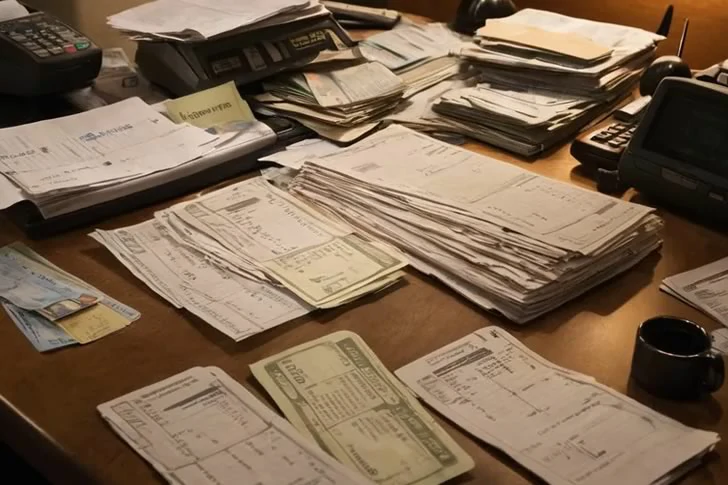
Accepting the full extent of his betrayal was one of the hardest things I’ve faced. The pieces of his strange, erratic behavior finally fit together, revealing a disturbing and uneasy picture. The hidden transactions, secret trips, and constant lies all served one dark purpose. “So, this is what it’s come to,” I murmured, shaking my head in disbelief and sadness. The bitter truth was painful to swallow, but it brought with it a measure of clarity that had been missing for so long.
Despite the devastation, knowing the truth was also strangely liberating. The fog of uncertainty lifted, revealing the reality no matter how harsh it was. The acceptance of this painful truth marked a turning point—a step toward healing and closure. It was the bitter medicine that needed to be taken to move beyond the lies and start rebuilding a life free from deception. Though it hurt deeply, I felt a flicker of strength returning.

The court case finally came to a close, ending a long and emotionally draining chapter of my life. The judge’s gavel dropped with finality, marking not just the conclusion of the legal proceedings but the beginning of my new life. “It’s over,” I whispered to Lisa, who stood quietly by my side, offering steadfast support. The financial settlements were settled, assets divided, and custody agreements formalized, putting the chaos of the past behind me.
This legal victory was more than just a win—it was a chance for a fresh start. Though the scars of betrayal and loss remain, I feel ready to face the future on my own terms. The decision gave me both justice and freedom, empowering me to rebuild my life with resilience and hope. It’s a new chapter filled with uncertainty but also with the promise of strength and renewal. The past is behind me, and I am finally moving forward.

Although the legal battles have ended, the journey ahead is still long and filled with challenges. Now, however, I possess the power and control to rebuild my life on my own terms. The past chaos no longer dictates my future, and this realization is both daunting and empowering. Sitting with Lisa over coffee, we map out the steps ahead, knowing it won’t be easy but feeling ready to face whatever comes. Each plan, each decision brings me closer to reclaiming what was lost.
With each passing day, I take deliberate steps forward, gradually restoring my sense of self and independence. The control I once thought was gone is slowly coming back, and though the future remains uncertain, it holds new possibilities. This new chapter isn’t just about survival—it’s about thriving. The strength I’ve gained fuels my resolve to embrace change and create a life that reflects who I truly am.

Finally uncovering the truth lifts a tremendous weight off my shoulders, and a wave of relief washes over me. No longer burdened by lies and deception, my mind clears, and I discover a renewed sense of strength within. Lisa’s words, “You did it,” echo warmly as we toast to fresh starts and new beginnings. Though the emotional journey has left scars, I’m not broken—I am transformed, ready to rise above the pain.
I feel like a phoenix reborn from the ashes, carrying with me lessons and resilience forged through hardship. Every morning offers a clean slate, a chance to redefine myself beyond the shadows of betrayal. This new strength isn’t just about moving on—it’s about embracing my own power and rewriting the story of my life on my own terms. Each day brings hope and growth.

I begin taking concrete steps to ensure my future is safe and secure, both legally and financially. With my lawyer’s guidance, I open new bank accounts and transfer assets solely under my name, creating a solid foundation for independence. “It’s about securing your peace of mind,” the lawyer reminds me, and those words resonate deeply. I realize that protecting myself now is an essential part of moving forward with confidence.
In addition to finances, I update important documents like my will and invest in insurance policies to safeguard what I have rebuilt. These practical measures may seem mundane, but they give me a renewed sense of control and stability. Taking charge of my future in this way reassures me that I’m no longer vulnerable to past mistakes. It’s empowering to know that I am actively shaping a safer, more secure life.

Lisa’s constant support proves invaluable during my darkest moments. She is my unwavering rock, always ready with a comforting cup of tea and a patient ear. Her steady presence reminds me I’m not alone in this difficult journey. “You don’t have to go through this alone,” she often says, and her words are a lifeline when the weight of the situation feels overwhelming. Her friendship offers a sanctuary of trust and comfort.
Together, we share laughter and tears as we navigate this new chapter, turning challenges into shared strength. Her unwavering support becomes a pillar in my life, anchoring me when I feel unsteady. Knowing she is by my side gives me courage and fortitude to face each day, no matter what struggles arise. With her beside me, I am reminded that resilience is built not just from within, but through the bonds of true friendship.

As this painful chapter closes, life begins to take a hopeful and positive turn. New opportunities arise, friendships deepen, and long-forgotten passions resurface, breathing fresh energy into my days. Lisa’s reassuring words, “The worst is behind you,” ring true as I start to feel a sense of liberation growing within me. It’s like stepping out of a dark storm into the warm sunlight, where everything feels brighter and more promising.
The shadows of the past gradually fade away, replaced by the glow of new possibilities. Each day brings a renewed sense of purpose and joy, and the future looks full of potential. This new beginning is not just an end to suffering—it’s a chance to embrace life fully and on my own terms. With hope guiding me forward, I am ready to build a brighter, more fulfilling future.
Advertisements
Advertisements